

Armed Guard Licensing
2 1/2 Days/$185
Schedule:
Day 1: 0830-1700 (Tuesday)
Day 2: 0830-1630 (Wednesday)
Day 3: 0900-1230 (Thursday)
You will need the following equipment:
1. Weapon you will carry on duty
2. Level 1 holster, prefer Level 2*
3. Magazine holder that holds 2 mags*
4. 3 magazines
5. You are encouraged, but not required to have a duty belt and 3 belt keepers
*Both the holster and mag holder must be able to have a belt threaded through them.
Attire:
1. No low cut shirts
2. Pants with belt loops
3. Closed toe shoes
4. NO yoga, sweat or leggings allowed

Armed Guard Renewal Class
5 Hours/$125
The state of Tennessee requires Armed Guards to renew their Registration every two years. As part of this process, the guard must go through a classroom session ending with a 50-question test, then to the range to qualify with their duty handgun.
The following equipment is required for renewal:
1. The handgun you will be carrying on duty
2. Level 1 holster (Level 2 preferred)*
3. Magazine holder with 2 magazine capacity*
4. 3 magazines
5. 50rds FMJ rounds
6. Prefer a duty belt and 3 belt keepers
*Both the holster and magazine holder must be able to have a belt threaded through them

Unarmed Guard Renewal
2 Hours/$50
The state of Tennessee requires unarmed Guards to renew their Registration every two years. As part of this process, the guard must go through a classroom session for 2 hours. Currently, there is no test requirement.

Unarmed Security License
6 Hours/$75
This course provides the training required to obtain an Unarmed Security Guard License. Students will learn the legal responsibilities, professional standards, and real-world skills needed to work in the private security industry.
Topics include Tennessee security laws, use-of-force considerations, observation and reporting, conflict management, and professional conduct. Designed for new guards, career changers, and companies onboarding security staff.
Meets state training requirements and prepares students for immediate employment in the security field.

Dallas Law
5 Hours/$150
This course provides the training required under Tennessee’s Dallas Law, focusing on the safe and responsible interaction with individuals in custody or under control. The class emphasizes practical skills and legal awareness to help security professionals reduce risk, prevent injury, and respond appropriately during critical incidents.
Training includes three core components:
Safe restraint techniques, verbal de-escalation, and CPR/First Aid response. Students will learn how to control situations without unnecessary force, recognize medical emergencies, and render life-saving aid when seconds matter.
Ideal for security professionals, detention staff, and organizations seeking compliant, liability-conscious training that prioritizes safety, professionalism, and duty of care.

Active Shooter Response
8 Hours/$150
Required for Armed Guard License Renewal in Tennessee
Stay compliant. Stay prepared. This course equips security officers with the critical skills needed to respond effectively during an active shooter incident
What you'll learn:
-
Recognizing pre-incident indicators and suspicious behavior
-
Immediate response priorities during an active threat
-
Movement, positioning, and use of cover
-
Communication with law enforcement and emergency responders
-
Managing civilians and directing evacuations
-
Post-incident responsibilities and scene control
-
Who This is For:
-
Armed Security Officers (Initial or Renewal)
-
Officers adding Active Shooter certification
-
Companies requiring compliant training for staff
Less Lethal Classes
901 Training Group provides practical, real-world instruction in Less Lethal Force options, including baton, chemical spray, and Taser/Stun Gun deployment. State regulations require a minimum of four hours of training for each less lethal tool carried. Our courses are designed to meet or exceed all applicable state training requirements while providing students with the knowledge and skills needed for safe and effective use.
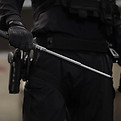
Baton
4 Hours/$75
The 901 Training Group Less Lethal Baton Operator Course provides students with the knowledge and practical skills necessary to safely carry, deploy, and use an expandable baton in a professional security environment.
This four-hour course is designed for security officers, church security personnel, and other professionals who may be authorized to carry a baton as part of their duties.
Upon successful completion, students will have a solid understanding of when baton use may be appropriate, how to employ it safely and effectively, and how to articulate their actions following a use-of-force incident.
Course Topics Include:
-
Use of Force Principles
-
Legal Considerations and Liability
-
Baton Types, Features, and Maintenance
-
Safe Carry and Deployment Techniques
-
Defensive and Protective Applications
-
Authorized Target Areas
-
De-escalation and Decision Making
-
Reporting and Documentation
-
Practical Skills Evaluation
Course Length: 4 Hours
Prerequisites: None unless required by employer or state regulations
Recommended For: Security Officers, Church Security Team Members, Safety Personnel, and Other Authorized Professionals
Certificate Issued Upon Successful Completion.

Chemical/Pepper Spray
4 Hours/$75
This 4-hour Pepper Spray Operator Course provides security officers with the knowledge and practical skills necessary to safely carry and deploy pepper spray in accordance with applicable laws, regulations, and industry standards.
Students will learn the capabilities and limitations of pepper spray, proper deployment techniques, target areas, decontamination procedures, reporting requirements, and the legal considerations surrounding its use.
Topics include:
-
Pepper spray characteristics and effects
-
Use of force considerations
-
Legal and ethical responsibilities
-
Carry methods and deployment techniques
-
Subject reactions and officer safety
-
Decontamination and aftercare procedures
-
Documentation and reporting
-
Practical application exercises
Upon successful completion, students will receive documentation of training that meets or exceeds state training requirements for officers authorized to carry pepper spray in the performance of their duties.
Course Length: 4 Hours
Who Should Attend: Security Officers, Church Security Personnel, Safety Team Members, and others authorized to carry pepper spray as part of their duties.

Taser Operator
4 Hours/$85
The Taser is a less lethal self-defense tool designed to help security officers manage potentially dangerous situations while reducing the likelihood of serious injury to all parties involved.
This 4-hour Taser Operator Course provides security officers with the knowledge, skills, and practical training necessary to safely carry and deploy a Taser in the performance of their duties.
Topics include:
-
Taser capabilities and limitations
-
Use of force considerations
-
Legal and ethical responsibilities
-
Device operation and maintenance
-
Targeting and deployment techniques
-
Officer safety and tactical considerations
-
Post-deployment procedures
-
Documentation and reporting requirements
-
Practical application exercises
Upon successful completion, students will receive documentation of training that meets or exceeds state requirements for security officers authorized to carry a Taser while performing their duties.
Course Length: 4 Hours
Who Should Attend: Security Officers, Safety Team Members, and other authorized personnel seeking certification in the safe and effective use of a Taser as a less lethal self-defense tool.
Tennessee Enhanced Armed Guard
Advanced training for Tennessee armed security officers seeking rifle and/or shotgun authorization. Learn the skills, responsibilities, and qualification standards required for professional long-gun deployment in the security industry.

Tennessee Enhanced Armed Guard Rifle Certification
32 Hours/$525
This advanced training program is designed for armed security professionals seeking the knowledge and skills necessary to safely deploy a rifle while performing security duties in Tennessee.
The course covers safe handling, operation, deployment, maintenance, qualification standards, legal considerations, use-of-force principles, and the responsibilities associated with carrying a long gun in a professional security environment.
Any individual holding a valid Tennessee Armed Security Guard Registration may attend this training. However, attendance alone does not qualify a student for Tennessee Enhanced Armed Guard certification.
To be eligible for Enhanced Armed Guard certification, students must possess a valid Tennessee Armed Security Guard Registration and meet at least one of the following prerequisites:
• A minimum of four (4) years of military service in a combat arms Military Occupational Specialty (MOS); or
• A minimum of five (5) years of law enforcement experience.
Successful completion of the course and satisfaction of all prerequisite requirements may qualify eligible armed security officers for rifle authorization, subject to Tennessee regulations, employer policies, assignment requirements, and all applicable laws governing armed security operations.

Tennessee Enhanced Armed Guard Shotgun Certification
16 Hours/$225
This two-day advanced training program is designed for armed security professionals seeking authorization to carry a shotgun while performing security duties in Tennessee.
Students will receive classroom and range training covering shotgun nomenclature, ammunition selection, loading and unloading procedures, malfunction management, marksmanship fundamentals, qualification standards, legal considerations, use-of-force principles, and the responsibilities associated with deploying a shotgun in the protection of life and property.
Any individual holding a valid Tennessee Armed Security Guard Registration may attend this training. However, attendance or successful completion of the course alone does not qualify a student for Tennessee Enhanced Armed Guard certification.
Students seeking certification must possess a valid Tennessee Armed Security Guard Registration and meet at least one of the following prerequisite requirements:
• A minimum of four (4) years of military service in a combat arms Military Occupational Specialty (MOS); or
• A minimum of five (5) years of law enforcement experience.
Successful completion of this course and satisfaction of all state-mandated requirements may qualify eligible armed security officers for shotgun authorization, based on Employer Policy.
This certification authorizes the carry of a shotgun only and does not provide authorization to carry a rifle.
Officers seeking rifle authorization must successfully complete the separate Enhanced Armed Guard Rifle Certification course and meet all applicable requirements.

Tennessee Enhanced Armed Guard Rifle/Shotgun Combo Certification
40 Hours/$625
The Tennessee Enhanced Armed Guard Combo program is a comprehensive 5-day program that provides advanced training for armed security professionals who may be authorized to carry a rifle, shotgun, or both while performing security duties.
This course is designed to develop the knowledge, judgment, and practical skills necessary to safely deploy long guns in a professional security environment.
Training includes firearms safety, handling, operation, maintenance, legal considerations, use-of-force principles, deployment techniques, and qualification standards specific to each platform.
Students will gain an understanding of the responsibilities associated with carrying a rifle or shotgun in the protection of life and property while operating within applicable laws, regulations, and employer policies.
Any individual holding a valid Tennessee Armed Security Guard Registration may attend these training courses. However, completion of training alone does not qualify an individual for Tennessee Enhanced Armed Guard certification. Students seeking Enhanced Armed Guard certification must meet all state-mandated prerequisite requirements in addition to successfully completing the applicable training and qualification standards.
This class is designed to combine the training for both the rifle and shotgun certification into one class to allow the Armed Security Officer to use either one during the course of their duty.